Golden Temple facts at a glance
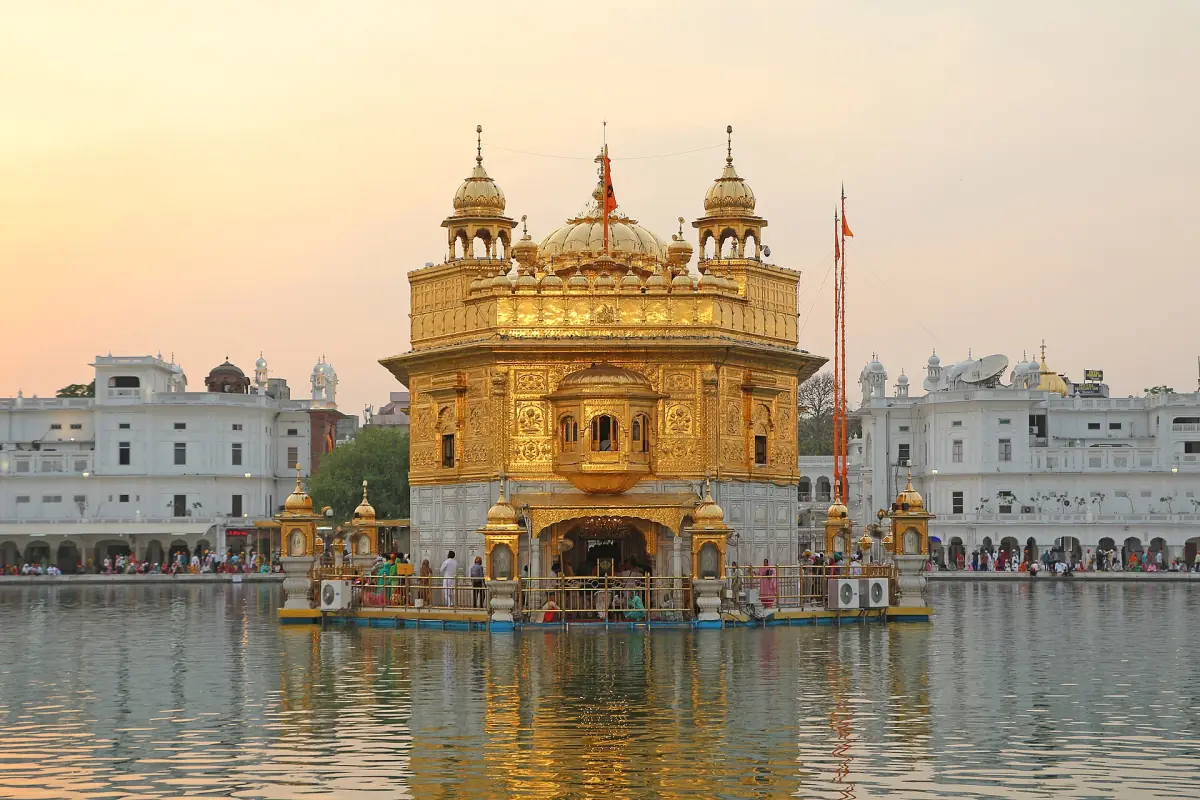
Sri Harmandir Sahib, also called Sri Darbar Sahib and the Golden Temple, is the most important shrine of the Sikhs. It stands in the middle of the Amrit Sarovar in Amritsar and is managed by the Shiromani Gurdwara Parbandhak Committee (SGPC). Entry is free, and people of every religion, caste and gender are welcome.
This page collects the numbers and dates people ask about most. Some figures vary, so each one is explained. If you are planning a visit, read the timings and rules first, or look at Golden Temple tours from Amritsar.
Gold, langar meals and visitors: how to read the numbers
Three figures that appear everywhere, and what to make of them.
How much gold is on the temple?
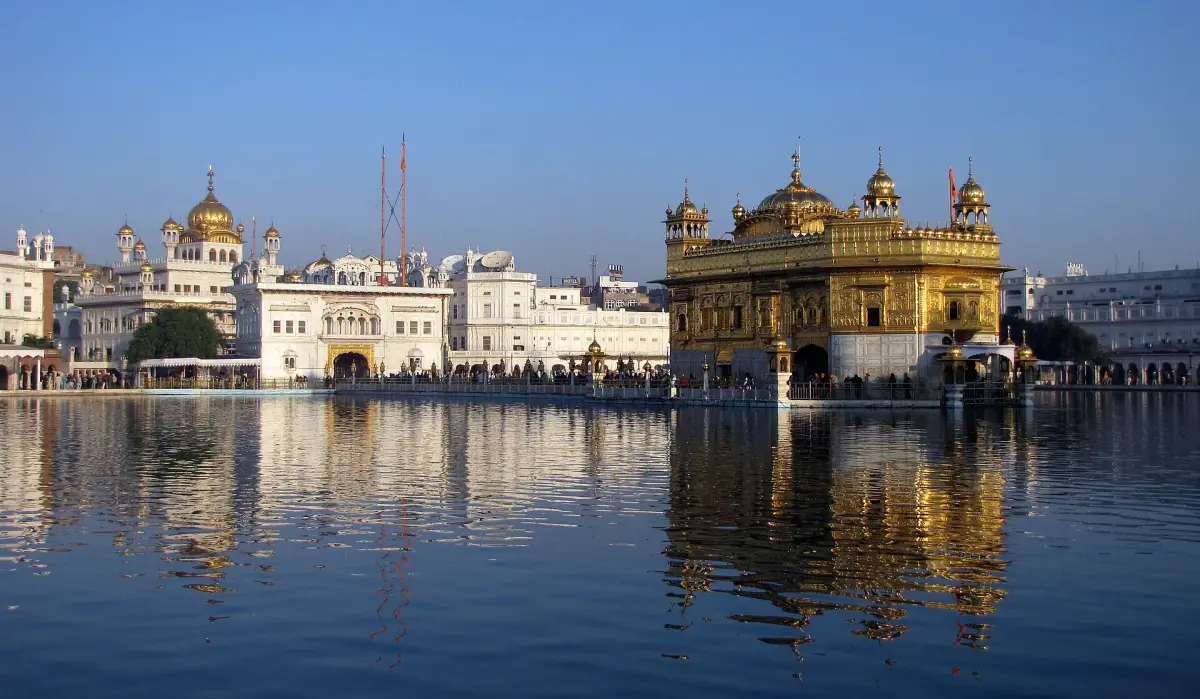
The upper parts of the building were gilded in the time of Maharaja Ranjit Singh. You will see about 400 kg of gold leaf and 750 kg of pure gold. They may count different things, and neither is a weighed total today. Use them as a rough scale and not as an exact number.
Ranjit Singh and the history →How many people eat at the langar?
Figures run from about 20,000 people a day to 100,000 on special occasions, and one figure speaks of 100,000 vegetarian meals a day. People, plates and busy days are counted in different ways, so treat the range as a sense of size.
The free kitchen →How many visitors come?
The crowds are very large every day, but there is no exact yearly count to quote. Langar meals are not a visitor count either, so use the figures above only to get a sense of scale.
Timings and rules →Our pick: the old city lanes
A short walk with stories from the lanes around the temple.
Hand-picked tours, booked through GetYourGuide. Prices are indicative starting prices in US dollars (as of October 2026). Tap a tour for live availability and the current price in your currency.
Golden Temple and Amritsar tours
Tours and day trips in Amritsar, with live prices and availability.
Size and architecture in numbers
The sanctum stands on a platform in the middle of the Amrit Sarovar.
| Item | Figure | Good to know |
|---|---|---|
| Platform | 67 ft by 67 ft (about 20.4 m) | The base of the sanctum inside the Sarovar |
| Temple | 40.5 ft by 40.5 ft (about 12.3 m) | The footprint, not the height |
| Doors | 4 | One on each side, a sign of openness to all people |
| Access | One causeway | Connects the shore, the Parikrama path and the sanctum |
| Gold | 400 kg to 750 kg | Rough figures for the gilded upper parts |
| Langar | 20,000 to 100,000 | People or meals per day, depending on the count |
| Entry | Free | Donations are voluntary |
The architecture joins Islamic and Hindu forms. For most visitors the useful numbers are the free entry, the four doors and the 24-hour langar. Treat the gold and meal figures as scale, not as exact data.
Key dates from Guru Ram Das to 1984
The short version. The full story is on the history page.
| When | What happened |
|---|---|
| 1570s to 1577 | Guru Ram Das plans and builds the city and the Sarovar. Work is complete in 1577. |
| 1588 or 1589 | Foundation stone of the sanctum: December 1588 with Mian Mir laying it, or 1589 in other accounts. Guru Arjan develops the central shrine and oversees the building. |
| 1604 | Guru Arjan installs the Adi Granth. Baba Buddha is the first granthi. |
| 10 April 1762 | Ahmad Shah Durrani attacks, damaging the shrine and the pool. |
| Time of Ranjit Singh | The upper parts are gilded. |
| 13 April 1919 | The Jallianwala Bagh massacre takes place nearby. See Jallianwala Bagh. |
| June 1984 | Operation Blue Star: Indian forces carry out a military operation in the temple complex. Estimates of the dead run from 575 to 3,000, and pilgrims were among them. |
Symbols and places inside the complex
Facts that explain what you see.
Four doors
The sanctum has an entrance on each side. In Sikh teaching this stands for the openness of the place to people of any caste, religion or gender.
Akal Takht
Guru Hargobind founded the Akal Takht, the seat of Sikh authority in the complex. It is not a viewing terrace. The Guru Granth Sahib rests there overnight.
Inside the temple →Dukh Bhanjani Beri
A revered jujube tree on the east side of the Sarovar. Stories about its healing power are part of Sikh tradition and belief. Do not pick the fruit.
Sikhism basics →More on the Golden Temple
Golden Temple history
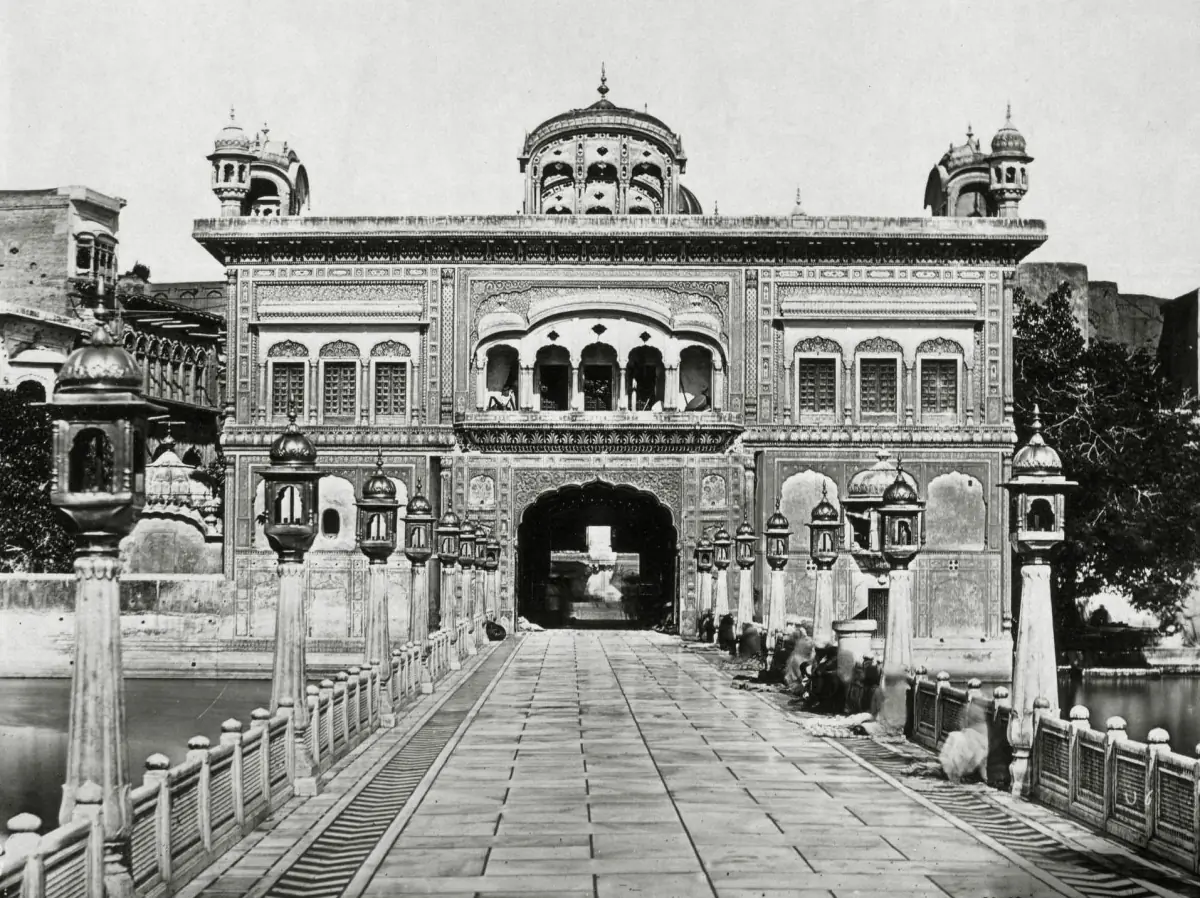
From Guru Ram Das to Ranjit Singh and June 1984.
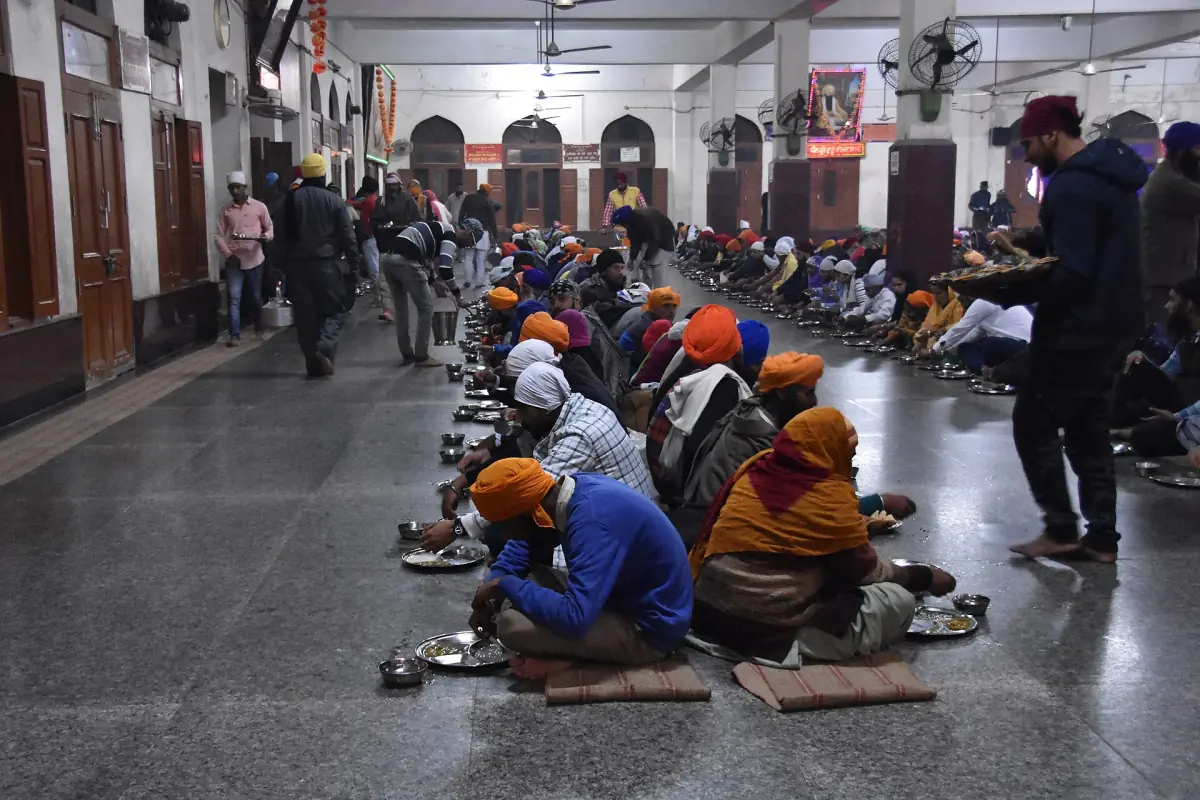
The free kitchen
How the meal works and how to help as a volunteer.
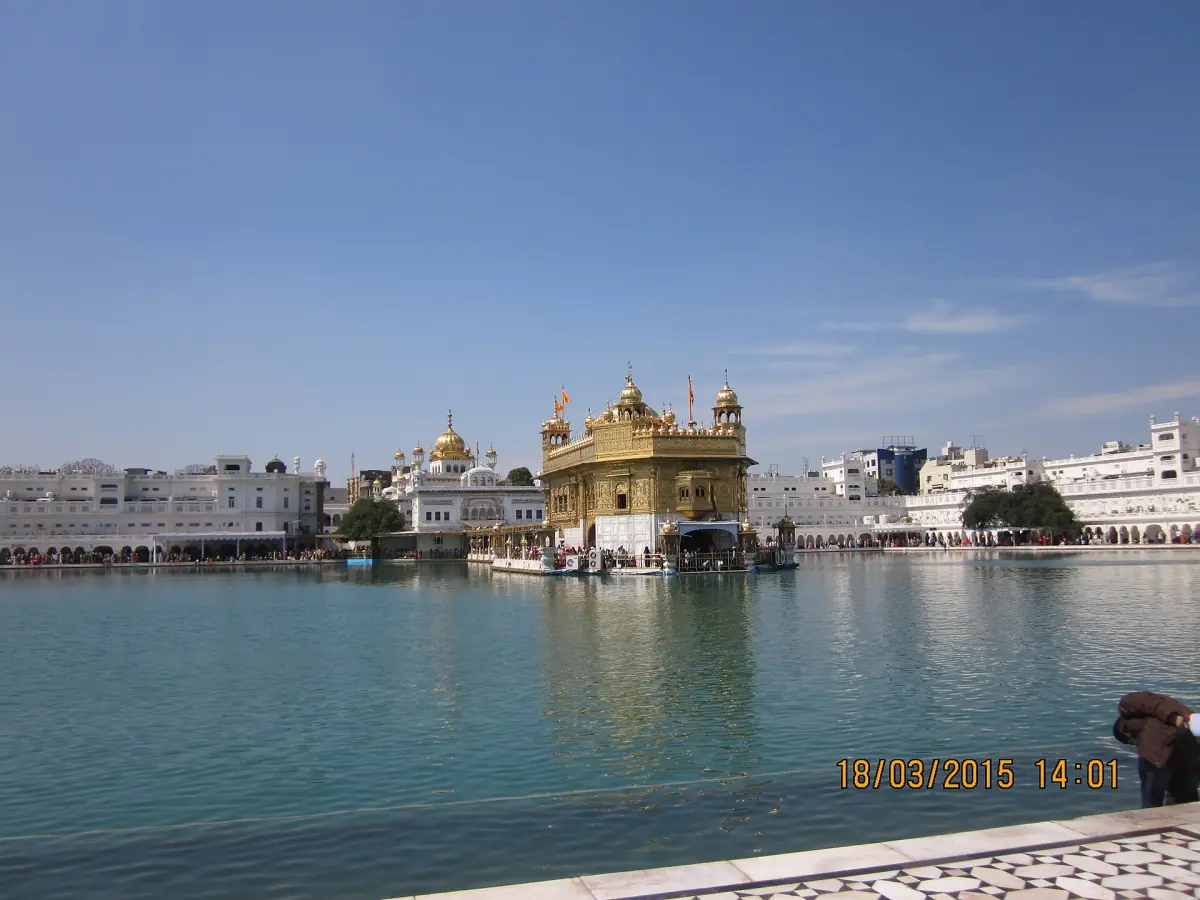
Sanctum, Akal Takht and Sarovar
What each part of the complex is and who may enter.
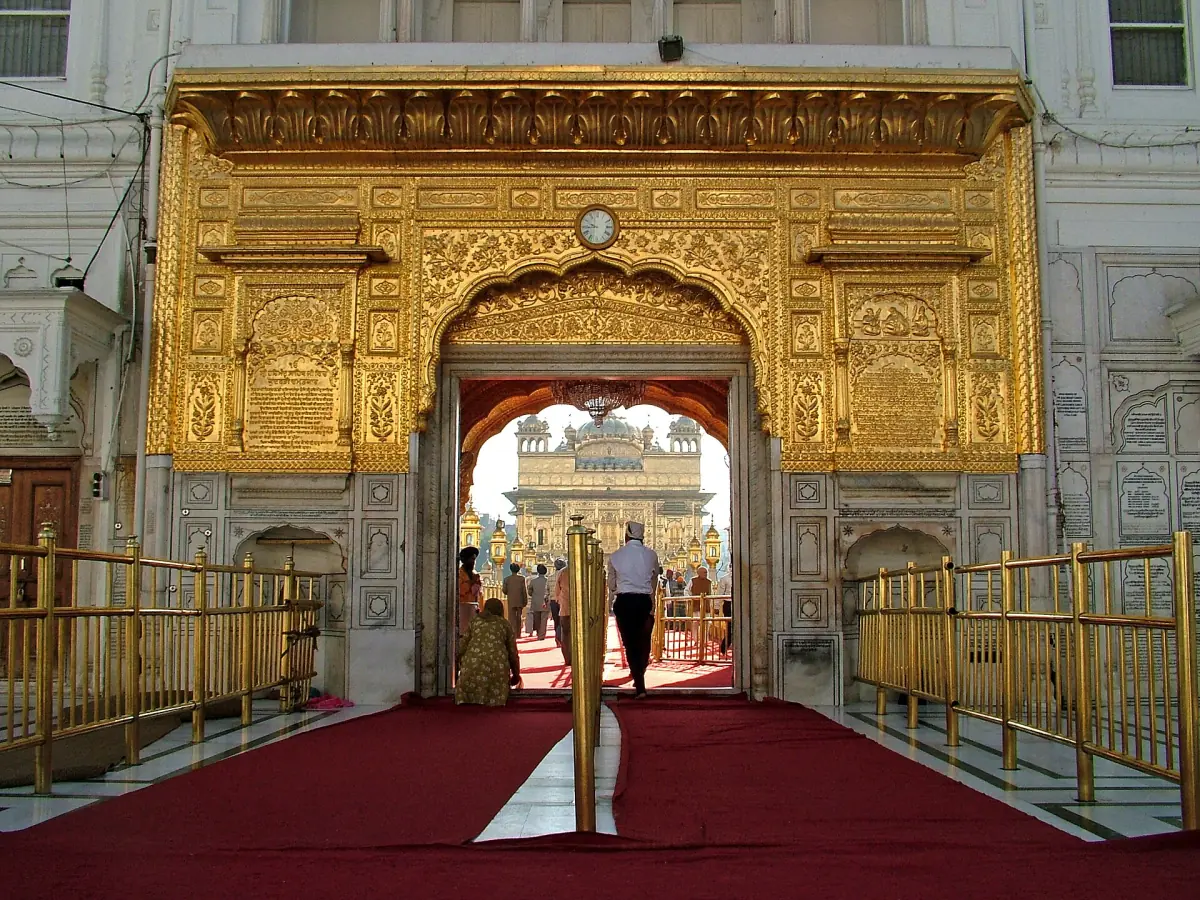
Timings and rules
Head covering, shoes, photos and opening hours.
Golden Temple facts: frequently asked questions
How much gold does the Golden Temple have?
You will see 400 kg of gold leaf and 750 kg of pure gold for the upper parts, gilded in the time of Ranjit Singh. Neither is a weighed total today, so use them as a rough scale.
Is entry to the Golden Temple free?
Yes. There is no ticket for adults, children or foreign visitors. Donations are voluntary and never a condition of entry.
How many people eat at the langar every day?
Figures range from about 20,000 people a day to 100,000 on special occasions, and one figure gives 100,000 vegetarian meals a day. It is a sense of scale, not an exact count of visitors.
When was the Golden Temple built?
Guru Ram Das planned the city and the Sarovar in the 1570s, finished in 1577. The foundation stone of the sanctum dates to December 1588 or 1589, and Guru Arjan installed the Adi Granth in 1604.
Why does the sanctum have four doors?
The doors on all four sides stand for the openness of the place to people without distinction of caste, religion or gender.
Is this the official Golden Temple website?
No. This is an independent visitor guide. It is not run by Sri Harmandir Sahib, the SGPC or Punjab Tourism. Check the notices at the entrance on the day of your visit.